

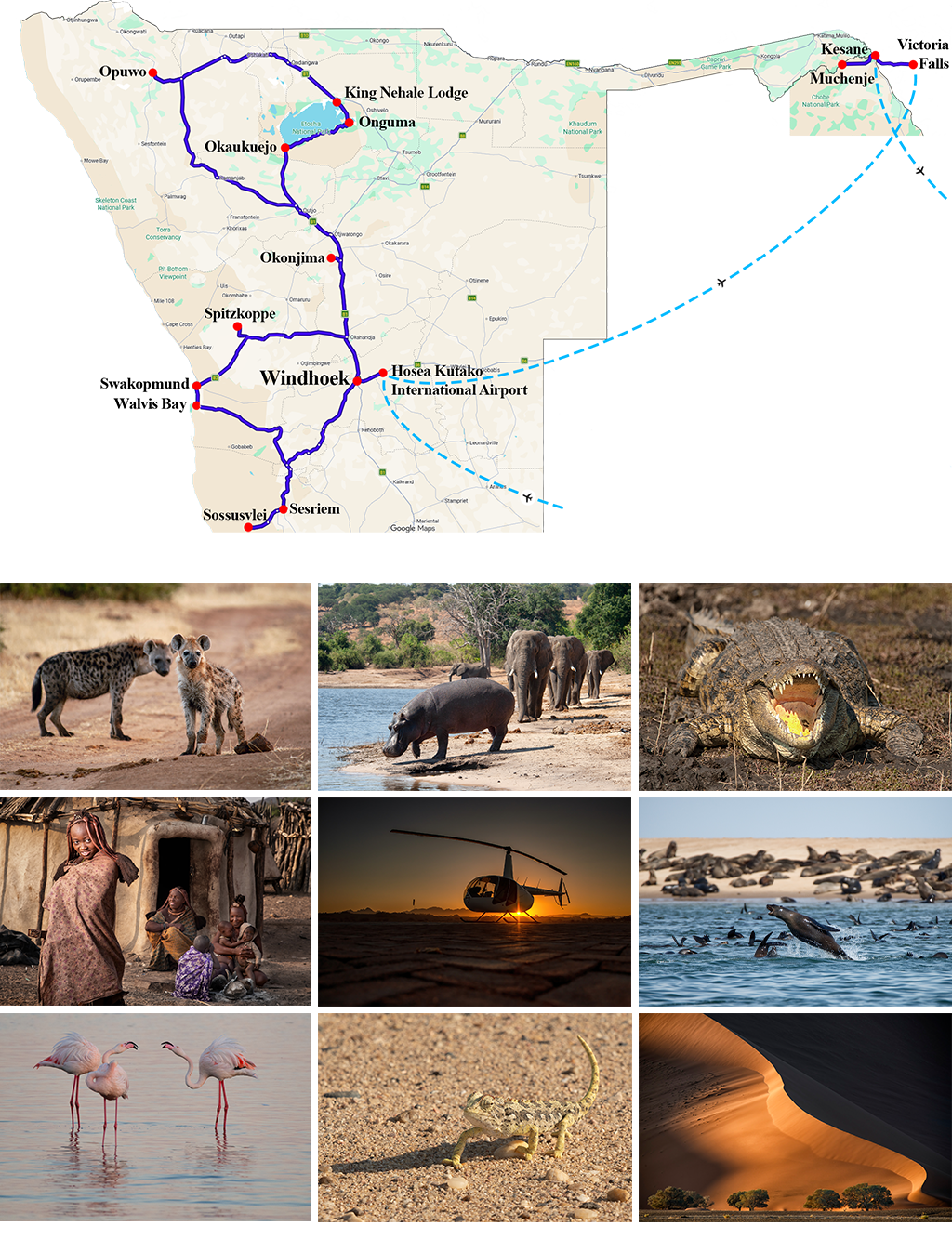
Date: May – 19 July 2027 (13 days/12 nights)
Optional extension Jul-Aug 2027 (5 days/4 nights)
Group Size: Minimum of 5, maximum of 12 people
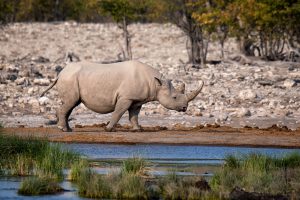
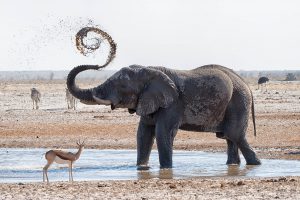
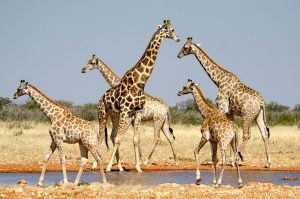
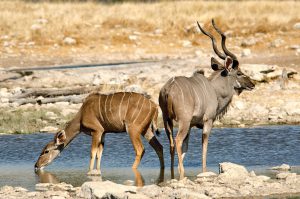
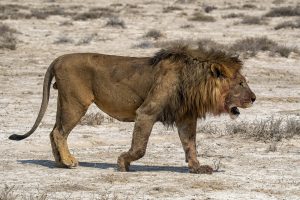
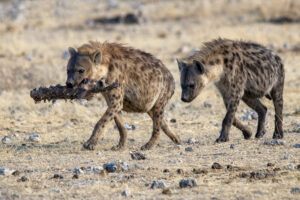
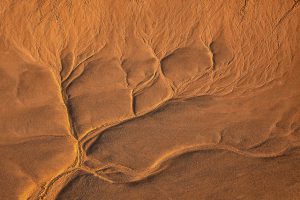
Namibia is a visual feast for photographers with endless desert landscapes, wild seascapes, amazing wildlife, colonial cities and remote nomadic people. For photographers, it’s unlike anywhere else in Africa, and this photographic tour has been put together to make the very most of many of the great photographic opportunities on offer.
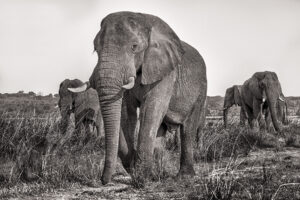
Chobe National Park is one of the top safari destinations in all of Africa and regarded as the elephant capital of the world. The Chobe River forms the border with Namibia and is renowned for its deep blue waters and array of wildlife.
Please Note: the online booking system is not yet functional, please contact us directly for further details.
Description
Day 1: WINDHOEK – ETOSHA NATIONAL PARK (L/D)
After clearing Customs & Immigration in Windhoek we meet our driver/s and then commence our long drive north to Etosha National Park, stopping at Outjo for lunch. We will also take the opportunity to go to the local supermarket to purchase personal supplies for the trip.
Late afternoon we arrive at Okaukuejo Resort in the central part of the park. Okaukuejo, located 17km’s from the southern entrance of the park is famous for its flood-lit waterhole, where visitors can observe at close quarters a spectacle of wildlife congregating and interacting. We will be accommodating in the waterhole chalets, meaning the iconic Okaukeujo waterhole is only a few steps from your room.
Day 2: ETOSHA NATIONAL PARK (B/L/D)
This morning, we rise early to commence a full day of game driving within Etosha National Park, commencing at the central part of the national park and then making our way east along the southern side of Etosha pan.
Etosha National Park is one of Southern Africa’s finest and most important Game Reserves. Etosha was declared a National Park in 1907 and covers an area of 22,270 square km’s, it is home to 114 mammal species, 340 bird species, 110 reptile species and 16 amphibian species. Etosha, meaning “Great White Place”, is dominated by a massive mineral pan. The pan is part of the Kalahari Basin, the floor of which was formed around 1000-million-years-ago. The Etosha Pan covers around 25% of the National Park and is normally a dry, white expanse, only containing water after substantial rain.
We take our time exploring many of the very best waterholes that Etosha has on offer. With each waterhole being a magnet for the local wildlife and different species that favour different locations, there will be numerous opportunities for photography.
After lunch at Halali we continue navigating our way from one waterhole to the next as we slowly make our way east to the Namutoni region of the park. As we travel, the environment will change, and with that, so will the wildlife.
Day 3: ETOSHA NATIONAL PARK (B/L/D)
Our day will commence by revisiting some of the waterholes around the Namutoni region from the previous day, before exploring new waterholes as we make our way north.
We arrive at our next lodge in time for lunch, after which we will have a short break before heading out again mid-afternoon in one the lodges open safari vehicle. Our destination on this occasion is a private waterhole and hide within the park. Imagine sitting in a hide, cold drink in one hand and your camera sitting on a bench in anticipation for the next photo opportunity.
Day 4: ETOSHA NATIONAL PARK – OPUWO (B/L/D)
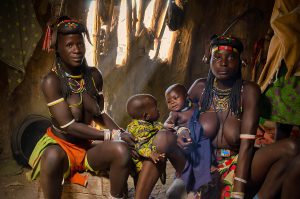
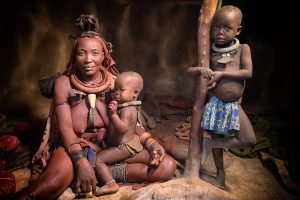
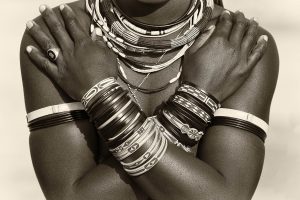
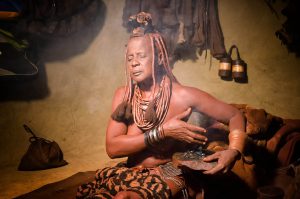
This morning, we depart early and heads west to Opuwo, home of the Himba, Zemba and Herero people.The Himba are semi-nomadic and unlike many indigenous groups in Africa, have managed to maintain much of their traditional lifestyle. Himba women have a particularly distinctive appearance. Each morning, they cover themselves with a mixture of butter fat, red ochre and local herbs that gives their body the smooth, reddish appearance as well as offering some sun protection. Married women wear a small headpiece made of soft animal hide on top of their braided and ochred hair. In addition, they often wear a heavy ornament around their necks that includes a conch shell that hangs between their breasts in the front and a metal-studded leather plate that hangs down the centre of their back. They also wear heavy metal rings around their ankles as well as other jewellery made of copper, ostrich shells or woven reeds.
Zemba, also known as Dhimba are found in Namibia and Angola. Their global population is approximately 14,000, with 5,700 living in Namibia. Like the Himba, they are also semi-nomadic. The Herero are proud cattle farmers who measure their wealth in cattle. The importance of cattle to these people is even evident in the dresses the women wear. The traditional dress is derived from a Victorian woman’s dress and consists of an enormous crinoline worn over a several petticoats, and a horn shaped hat (said to represent cow horns). As with the Himba the Herero have a holy, ritual fire which symbolises life, fertility and prosperity. When visiting a village or a compound, it’s important to walk around the holy fire, even if it’s not burning.
In the afternoon we will visit and photograph a local Herero village.
Day 5: OPUWO (B/L/D)
We rise early to visit a Himba village outside of the town. We commence our visit experiencing and photographing the village as it wakes and the people set about their daily tasks. Afterwards we enjoy a special portrait photo shoot using a backdrop and lighting.
Mid to late morning we return to our lodge for lunch and then have some time to relax before heading out again in the afternoon.
In the afternoon we visit a local Zemba village, photographing them going about their daily chores. If time allows, we may also arrange some special portrait shoot opportunities.
Day 6: OPUWO – OKONJIMA GAME RESERVE (B/L/D)
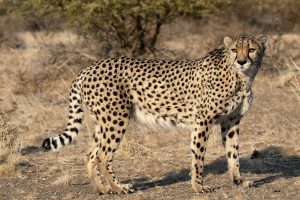
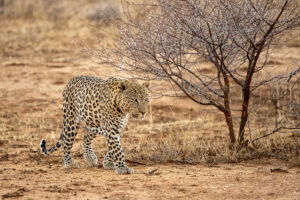
This morning, we depart Opuwo early and head south to Okonjima Nature Reserve, famed for frequent leopard, brown hyena and pangolin sightings. Whilst seeing and photographing a pangolin would be great, they are very shy animals. Our main goal however will be to seek out cheetah and leopard.
Mid-afternoon we head out on a game drive to seek out leopard and any other wildlife we come across. In the evening, we visit the camp’s nocturnal hide, where we may see some after-dinner activity from porcupines, honey badgers and caracals, among other night-time animal species.
Day 7: OKONJIMA GAME RESERVE – SPITZKOPPE (B/L/D)
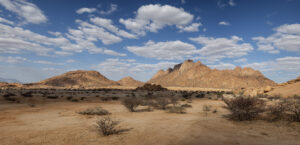
We rise early this morning to seek out and photograph cheetah before returning to the lodge for breakfast.Mid-morning we depart and head south-west to Spitzkoppe, a group of bald granite peaks or bornhardts majestically rising out of the Namib Desert.
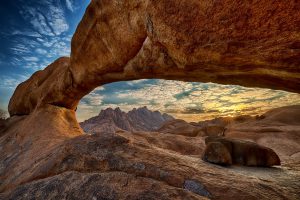
After lunch at our lodge, we explore the magnificent natural arch and surrounding rock formations, concluding at a suitable location to watch and photograph the sunset. After dinner we venture back to the natural arch to do an astrophotography shoot.
Day 8: SPITZKOPPE – SWAKOPMUND (B/L/D)
This morning, we rise early for a sunrise shoot at the natural arch as the first rays of sunlight hit the granite peaks. After breakfast we travel south-west to Swakopmund, arriving in time for lunch.
Swakopmund was of major importance as a harbour during the German colonial era, even though the water at the coast is actually too shallow and the bay is unprotected. Luderitz was too far away and the seaport of Walvis Bay was in British possession in those days. In August 1892, the gunship “Hyäne” under the command of Captain Curt von François, staked out a wharf north of the Swakop River mouth. A year later, 40 settlers from Germany and 120 members of the Schutztruppe were taken ashore on landing boats to embark upon an adventurous undertaking. The 325-metre-long wooden jetty was only completed in 1905 and it was later replaced by a more solid iron construction. Swakopmund became the gate to South-West Africa and the entire supply for the colony went through this little town. The appearance of the town, with its 30,000 inhabitants, is characterised by numerous colonial buildings with the Woermann House from 1905 as its landmark.
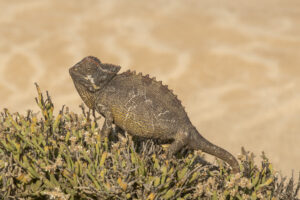
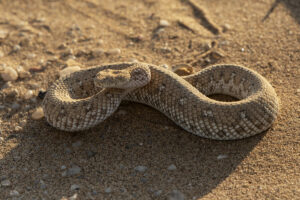
After lunch we check into our hotel and prepare for our Living Desert tour departing at 2:15pm. This tour will take us inland from Swakopmund to visit the scenic though apparently barren landscape to find hidden treasures. We will be tracking chameleons, snakes, skinks, scorpions, lizards, geckos and other small creatures, and learn more about the area’s desert ecology.
Day 9: SWAKOPMUND – SOSSUSVLEI (B/L/D)
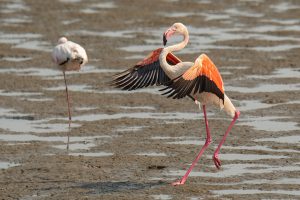
This morning, we head south to Walvis Bay where we photograph the beautiful Flamingos in the early morning light before the wind picks up, seeking those spectacular reflection images.
After a simply packed breakfast we enjoy a relaxing boat cruise, providing an opportunity to see and photograph some of the local wildlife, such as pelicans, Cape Fur Seals, Dolphins, Whales and other local water birds. An early light lunch is served on the boat.
After our boat cruise, we travel by car to Sesriem. This will be approximately a 5-hour drive with some brief stops along the way to stretch our legs and get some quick photos. The gates of the National Park close at sunset (6:38pm), and we will need to do our best to arrive before this time.
Day 10: SOSSUSVLEI (B/L/D)
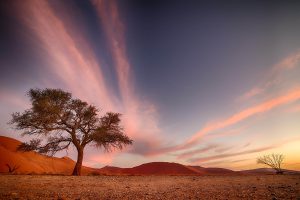
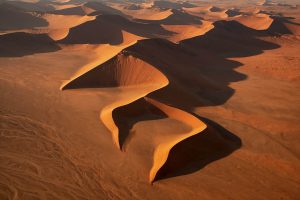
This morning, we travel by car into the park, photographing the sand dunes from the side of the road as shadows form in the early morning light. We will also climb one of the sand dunes by foot, offering some amazing landscape opportunities.
After lunch, we have the option to visit Sesriem Canyon, located not too far from the Lodge. Sesriem Canyon is one kilometre long and up to 30 meters deep and was formed by the rare flow of water down the Tsauchab River over the past two million years. The name Sesriem is Afrikaans and means “six belts”, since the early settlers had to attach together six belts (made of oryx hides), in order to reach buckets down into the canyon to scoop up water. The Sesriem Canyon is only two meters wide in some places, and has a portion that permanently contains water, which many animals use. Past the canyon, the Tsauchab flattens and grows broader, and is surrounded by a riparian forest as it slopes towards the Sossusvlei salt pan.
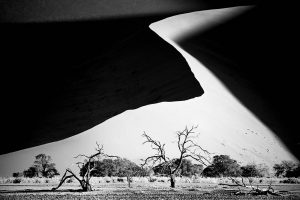
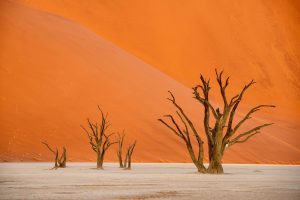
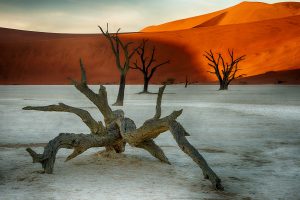
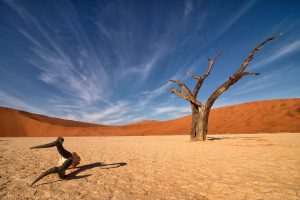
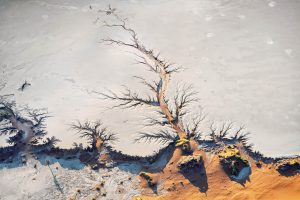
This afternoon we enjoy a one-hour drive back down into the Sossusvlei, stopping at the end of the road where we continue by foot into the Dead Vlei, one of the most famous locations for photography in Namibia. This clay pan was formed after rainfall, when the Tsauchab river flooded, creating temporary shallow pools where the abundance of water allowed camel thorn trees to grow. When the climate changed, drought hit the area and sand dunes encroached on the pan, which blocked the river and subsequently killed the trees. The remaining skeletons of the trees, which are believed to be about 900 years old, are now black because the intense sun has scorched them. The wood does not decompose because it is so dry.
Our walk is around 1.5kms (each way) through pebbly and sandy dunes, and we will arrive just as the majority if not all of the tourists have departed for their hour drive back to the gate before it closes at sunset. We have sufficient time to explore and photograph the area, commencing our walk back to the vehicle after sunset and then returning to the lodge.
Day 11: SOSSUSVLEI (B/L/D)
This morning, we travel by car into the park, photographing the sand dunes from the side of the road as shadows form in the early morning light. Whilst this trek may be a repeat, rest assured it will produce different images to those taken on the previous morning.
In the middle of the day, you will have some free time to relax at the lodge, catch up on some chores or edit images. We will also enjoy a buffet lunch at a nearby lodge.
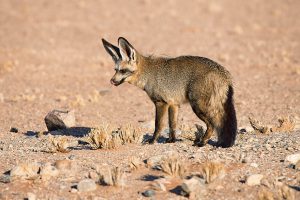
In the afternoon we have one final trip back down the valley. With the light coming from the opposite direction now, we will have numerous stops along the road to photograph the constantly changing shadows on the dunes. We should also keep our eyes open for wildlife, as Gemsbok, Ostriches and Bat-eared foxes can be seen.
Day 12: SOSSUSVLEI – WINDHOEK (B/L/D)
This morning we check out of our lodge and drive to &Beyond Lodge for our optional helicopter flight. This flight will either be in two Bell 206 helicopters or a Bell 407 if available, no doubt depending on final numbers. Everyone will have a window seat and doors will be removed. Our flight is scheduled to depart at 8am and will be for a duration of approximately 1 hour.
It’s now time to farewell the Sossusvlei and commence our long drive back to Windhoek. After checking into our hotel for the night, you are free to relax before heading out for dinner at a renown local restaurant.
Day 13: WINDHOEK – DEPARTURE (B)
For those who are concluding their tour today, it’s time to farewell Namibia. After breakfast you will be transferred to the airport for your flight back to Johannesburg and connecting flight home.
OPTIONAL VICTORIA FALLS/CHOBE NATIONAL PARK EXTENSION TOUR
Day 13: WINDHOEK – VICTORIA FALLS (B/L/D)
This morning, we rise early for our flight from Windhoek to Victoria Falls. After completing border formalities, we transfer to our hotel for lunch.
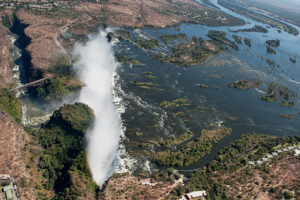
After lunch we have the afternoon to explore and photograph the amazing Victoria Falls.
Day 14: VICTORIA FALLS – CHOBE NATIONAL PARK (B/L/D)
This morning, we venture back to Victoria Falls to seek out new images in the early morning light.
After lunch we commence our transfer from Victoria Falls to Chobe National Park, stopping at the Zimbabwe/Botswana border for formalities.
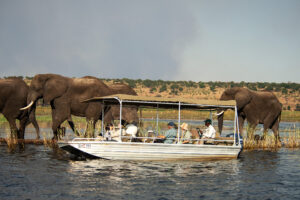
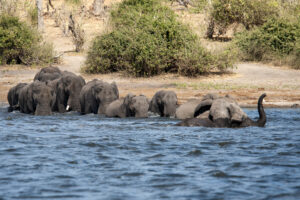
Chobe National Park will be a complete contrast to the dry, desolate landscape we experienced during our travels in Namibia. Being home to more than 120,000 elephants, Chobe National Park is regarded as the elephant capital of the world, and whilst it’s always amazing so see these amazing creatures, it’s the Chobe River and riverfront that we have come to explore. The Chobe River forms the border with Namibia and is renowned for its deep blue waters and array of wildlife.
You will have some time to relax and prepare your photographic gear for two full days of wildlife photography. After dinner, we head out on a night safari. Whilst it may not be ideal for photography, it will present us an opportunity to seek out more elusive and nocturnal wildlife.
Day 15: CHOBE NATIONAL PARK (B/L/D)
We rise early to go on a game drive along the riverfront of the Chobe River.
Late morning we head out again in the safari vehicle, however on this occasion our destination is the Chobe River where we experience a different vantage point from a boat.
On completion of our amazing boat trip, our adventure continues in our safari vehicle before returning to the lodge late afternoon.
Day 16: CHOBE NATIONAL PARK (B/L/D)
We rise early to go on a game drive along the riverfront of the Chobe River.
Late morning we head out again in the safari vehicle, however on this occasion our destination is the Chobe River where we experience a different vantage point from a boat.
On completion of our amazing boat trip, our adventure continues in our safari vehicle before returning to the lodge late afternoon.
Day 17: CHOBE – KASANE – JOHANNESBURG – FLIGHT TO AUSTRALIA (B)
Depending on our flight time, we may have time for one final safari drive this morning.
Our amazing photographic adventure covering three countries and countless photographic opportunities concludes today. After breakfast we transfer to the airport in Kasane for our return flight to Johannesburg where we will wait for our connecting flight to Australia.
Download itinerary in PDF format here.

Download e-brochure in PDF format here.
-
- www.malcolmfackender.com
-
- www.malcolmfackender.com
Additional information
| Details | Included • The complete tour as per itinerary Not included • All international flights, including Johannesburg to Windhoek, Windhoek to Victoria Falls and Kesane to Johannesburg |
|---|
Related products
-
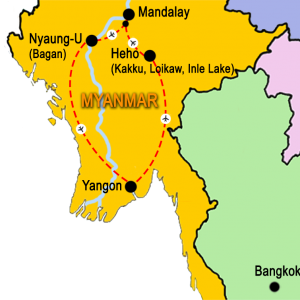
2022 Myanmar
USD$ 5,495 – USD$ 6,195 Select options This product has multiple variants. The options may be chosen on the product page -
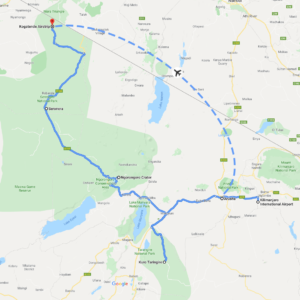
2023 Tanzania Photographic Tour
USD$ 11,495 – USD$ 12,890 Select options This product has multiple variants. The options may be chosen on the product page -
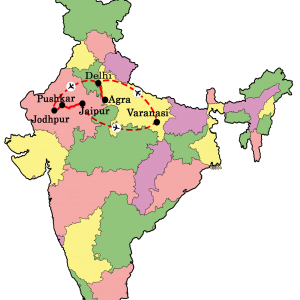
2021 India
USD$ 4,759 – USD$ 5,745 Select options This product has multiple variants. The options may be chosen on the product page -
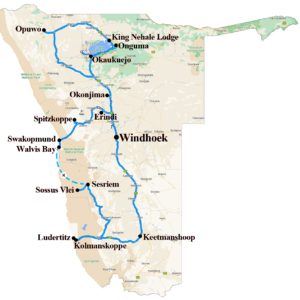
2022 Namibia Photographic Tour
USD$ 8,595 – USD$ 14,990 Select options This product has multiple variants. The options may be chosen on the product page